
Motocross The Game 250F vs 450F: Which Bike Should You Ride?
250F or 450F in Motocross The Game? Compare power delivery, weight, setup, leaderboards and the best class for new and experienced sim riders.
Start on the 250F if you are learning the game, and move to the 450F when you can complete clean laps and want more torque. The 250F rewards momentum and smooth lines; the 450F rewards throttle control and strength. The time attack and race leaderboards are split by class, so you are not penalised for choosing the smaller bike.
Motocross The Game ships with two bike classes, and they are not cosmetic variants. The 250F and 450F each have their own engine, gearbox, suspension and power-delivery model. That means the choice changes how you ride every corner, not just how fast you go on the straight.
The right answer depends on your experience, the track and what you want from the game. Here is how the two classes differ and how to decide.
The short version
| 250F | 450F | |
|---|---|---|
| Power | Less torque, more revs | More torque, stronger hit |
| Weight feel | Lighter, easier to place | Heavier, more physical |
| Corner entry | Forgiving, carries momentum | Demands precision and throttle control |
| Corner exit | Needs clutch and revs | Pulls from low revs, easier to spin |
| Best for | Beginners, tight tracks, learning lines | Experienced riders, fast tracks, deep ruts |
| Leaderboards | Separate 250F class | Separate 450F class |
The 250F is not a beginner bike in the real-world sense. It is a fully competitive class with its own world records. It is simply more forgiving while you learn the game's physics.
How the 250F rewards momentum
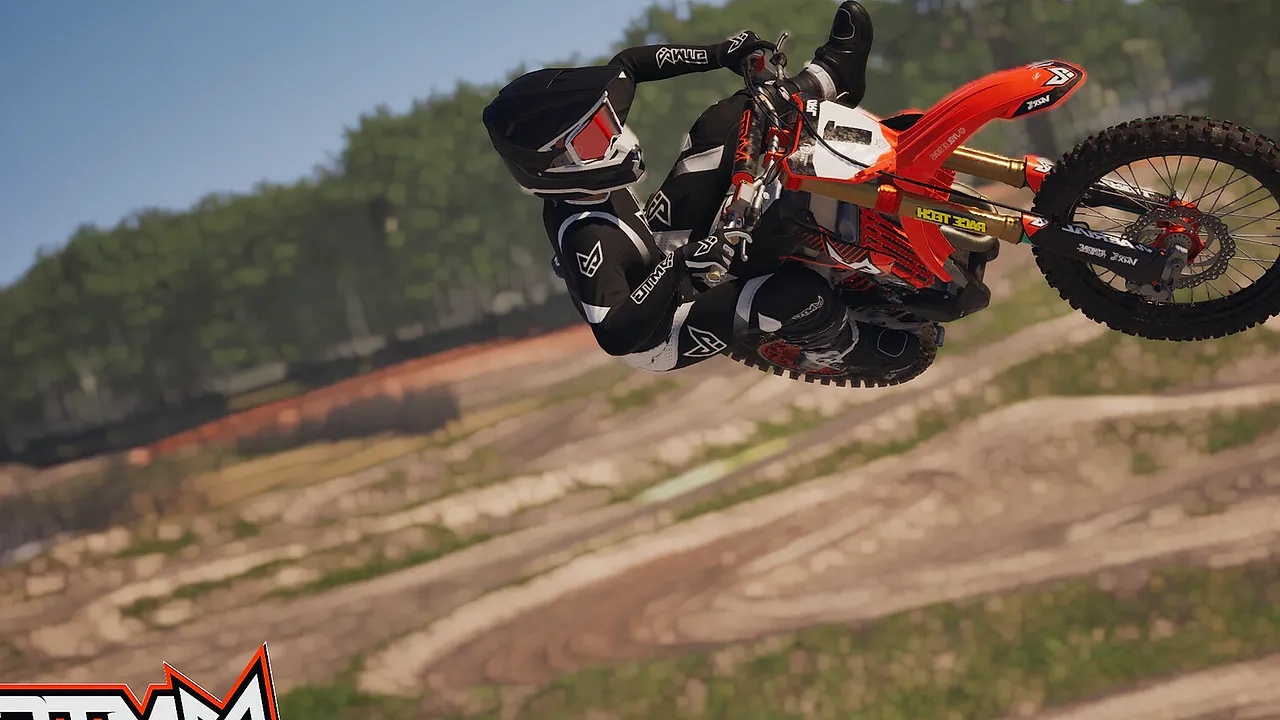
The 250F makes less torque, so it does not rescue a bad corner exit. If you brake too late, miss the rut or get on the throttle too early, the bike loses speed and takes time to recover. That sounds like a disadvantage, but it is also a teaching tool: the 250F makes it obvious when your line is wrong.
The upside is that the 250F carries corner speed beautifully. It is lighter, easier to move around and less likely to spin the rear tyre on exit. On a tight track with deep ruts, that can be faster than a 450F for a rider who keeps the bike in the powerband.
The 250F also demands more gearbox work. You will shift more often and use the clutch to keep the engine alive in slow corners. That is part of the class's character, and it teaches you to plan ahead.
How the 450F rewards throttle control
The 450F makes enough torque to pull out of a slow corner without slipping the clutch. It can also spin the rear tyre and lift the front wheel with a careless throttle input. The bike is more physical, more demanding and more rewarding when you get it right.
On a fast track with long straights and deep ruts, the 450F can use its torque to drive out of corners and carry speed. The extra power also makes it easier to clear jumps from a shorter run-up, provided you can put the power down.
The 450F is less forgiving of bad body position. If you sit too far back on corner entry, the front will push. If you grab too much throttle on exit, the rear will step out. The bike asks you to be deliberate.
Which bike should a beginner choose?
Choose the 250F. The lower torque gives you room to learn throttle control, body position and line choice without the bike reacting violently. You can still race online and set time attack laps; the 250F class has its own leaderboard and its own world records.
Ride the 250F until you can complete ten clean laps on one track without a major mistake. Then try the 450F for a session. You will immediately feel the extra torque, and you will understand why the 250F was easier.
Do not assume the 250F is slow. The current 250F world record on Midsummer Carnage is 0:49.496, which is faster than most riders can manage on either bike.
Which bike should an experienced rider choose?
If you already understand the game's physics, the 450F is the more rewarding bike on fast, open tracks. It rewards clean inputs and punishes laziness, which is exactly what an experienced rider wants.
On tight, rutted tracks, the 250F can still be the faster choice because it carries corner speed and is easier to place. The right class depends on the track and your style, not on a universal hierarchy.

Setup differences
The two bikes need different setups. The 450F's extra torque means it can pull taller gearing without feeling lazy, and it is more sensitive to rear tyre pressure on corner exit. The 250F often benefits from shorter gearing to stay in the powerband.
Suspension also differs. The 450F's extra weight and speed put more load on the front under braking, so it may need more front support. The 250F can run a slightly softer setup because it is lighter and carries less speed into a corner.
Do not copy a 250F setup onto a 450F. Start from the stock setup for each class, then tune one thing at a time.
Time attack and leaderboards
Time attack leaderboards are split by bike class. That means a 250F lap and a 450F lap are not compared directly. If you are chasing a personal best, pick a class and stick with it long enough to learn the bike.
The leaderboard also shows the number of riders per class, which is a useful signal of competition depth. If one class has far more riders, the lap times at the top will be more refined. Check both classes on your favourite track before you decide where to invest.
Racing online
Online races use the same two classes, and the Dual Rating System tracks your Skill Rating and Safety Rating. The class you choose affects your results, but it does not change the rating system. A clean, fast 250F rider can climb just as high as a clean, fast 450F rider.
If you are new to online racing, the 250F is the safer choice because it is less likely to spin or wheelie under pressure. Once you are comfortable in traffic, try the 450F in a private lobby before you take it into a ranked race.
Track-by-track considerations
Rödeby CK (hard-pack). The 450F can use its torque on the straights, but the 250F is easier to place in the ruts. Try both.
Midsummer Carnage (deep ruts). The 250F's lighter feel and corner speed are an advantage for most riders. The 450F can be faster if you can keep the rear from spinning.
Pacific Crown (sand). The 450F's torque helps in sand, but the extra power can dig the rear tyre. The 250F rewards momentum.
Estrella MX (US track). The long lap and time attack focus reward consistency. Pick the class you can lap repeatedly without mistakes.
Linköpings MS. A balanced Swedish track; both classes are viable. Test the gearing first.
Green Peaks. Learn the layout on the 250F before you try the 450F.
Common mistakes
Choosing the 450F because it is "the fast bike". The fast bike is the one you can ride consistently. For most beginners, that is the 250F.
Using the same setup for both classes. The bikes have separate engines, gearboxes and suspension. Treat them as separate projects.
Ignoring the class leaderboard. A 250F world record is still a world record. The class is competitive.
Switching classes every session. You will not learn either bike. Pick one for a week.
For the next step, the full bike setup guide→ covers the related inputs in more detail.
FAQ
Is the 250F slower than the 450F? On a long straight, yes. Over a full lap, it depends on the track and the rider. The 250F often carries more corner speed and is easier to place in ruts.
Can I race online on the 250F? Yes. Both classes have online racing and separate time attack leaderboards.
Which bike is better for a beginner? The 250F. It is more forgiving of throttle and body-position mistakes, and it teaches momentum.
Does the 450F have more content? No. Both classes share the tracks, gear and online features. The difference is the bike model and its setup.
Sources
- Motocross The Game on Steam ↗
- Official Motocross The Game site ↗
- Official time attack leaderboards ↗
Official source: Steam store description, official about page and official leaderboard, checked November 10, 2026.