
Motocross The Game Jumps and Whips: Air Control
How to jump, scrub, whip and land in Motocross The Game: takeoff body position, throttle control, mid-air adjustments and a safe practice progression.
Set your speed before the face, stay neutral or slightly forward on takeoff, and make small inputs in the air. Whips and scrubs are advanced moves; learn to clear and land the jump straight first. If you are casing the landing, you need more speed or a different line, not more throttle on the face.
Jumps are the most visually exciting part of motocross and the easiest place to lose a lap. A jump that looks spectacular in a replay can be a disaster in a race if you land off-line, case the landing or lose the front on the face.
Motocross The Game simulates the rider and the bike separately, which means air control is not a canned animation. Your body position and throttle input affect how the bike rotates. That gives you more control than an arcade racer, but it also means you can make the bike do the wrong thing.
Understand the jump before you hit it
Every jump has a face, a lip, a gap and a landing. Before you try to clear it, ride past it slowly and look at the shape. Is the face steep or flat? Is the lip sharp or rounded? Is the landing uphill, flat or downhill? Is there a rut on the face that will guide you or pull you off-line?
The safest way to learn a jump is to roll it first. Roll the jump at low speed, feel the suspension compress and release, and learn where the bike lands. Then increase speed in small steps until you are clearing it.
Do not follow a faster rider into a jump you have not measured. They may be using a different line, a different gear or a different bike.
Speed is set before the face
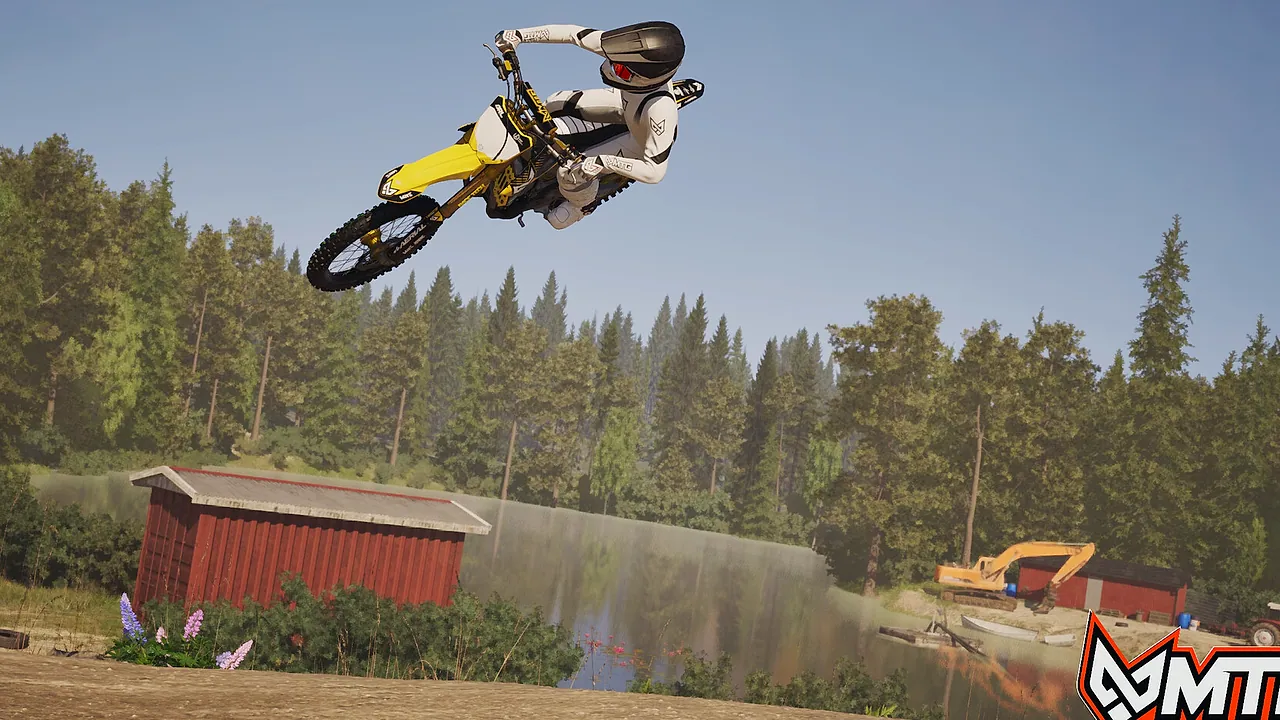
The most common jumping mistake is trying to add speed on the face. By the time the front wheel reaches the lip, your speed is mostly set. If you are short, you needed more speed earlier, not more throttle now.
Approach the jump in the right gear. On a 250F, you may need to be in the meat of the powerband. On a 450F, you can often use a taller gear and let the torque carry you. If you shift on the face, the bike will pitch.
Keep the throttle steady through the face. A sudden increase will lift the front and can loop the bike; a sudden drop will load the front and can send you over the bars.
Body position on takeoff
Stay neutral or slightly forward as the front wheel leaves the lip. If you lean too far back, the front rises and the bike rotates nose-up. If you lean too far forward, the front drops and you risk a nose-down landing.
Stand up and let your legs absorb the transition. Keep your elbows up and your head over the bars. Look at the landing, not at the lip.
Focus on the spot where you want to land, not the gap. Your body will make small corrections to reach the target.
Air control
Once you are in the air, small inputs are enough. Throttle changes the rear wheel speed, which affects the bike's rotation. Rear brake can bring the nose down. Body movement shifts the weight and changes the pitch.
If the nose is too high, ease off the throttle and move forward slightly. If the nose is too low, a small throttle input and a shift back can bring it up. Do not make a big correction; a little goes a long way.
For a straight jump, the goal is to land with both wheels at the same time or the rear slightly first. A front-wheel-first landing is unstable. A rear-wheel-first landing can be fine if the bike is straight.
Whips and scrubs
A whip is a sideways movement in the air. A scrub is a low, sideways takeoff that keeps the bike close to the ground. Both are advanced techniques, and both start on the face.
A whip begins with a small body movement and a turn of the bars as you leave the lip. The bike rotates sideways, then you bring it back before landing. Start with small whips on a jump you know well. Do not try to whip a jump you cannot clear straight.
A scrub is a way to stay low and carry speed. You lean the bike over on the face and let the rear step out, then bring it back for the landing. It requires precise speed and body position. Learn it on a small jump with a wide landing.
If the game does not reward style, do not spend your practice time on whips. A clean, straight jump is faster and safer. Use whips for fun once you can clear the jump consistently.
Landing
Land with the bike straight and the throttle slightly on. A small amount of throttle keeps the rear wheel spinning and stabilises the bike. If you land with the throttle closed, the rear can kick.
Absorb the landing with your legs and let the suspension work. If you land flat-footed with stiff legs, the bike will bounce and you will lose control. If you land nose-down, get your weight back and prepare for a big compression.
If you case the landing, do not panic. Stay on the bike, absorb the impact and ride out. Casing is a sign that you need more speed or a different line, not more aggression.
Rhythm sections
A rhythm section is a series of jumps where the landing of one jump becomes the takeoff of the next. The key is to link them with a consistent speed and body position, not to treat each jump as a separate event.
Ride the section slowly first. Count the jumps and identify the landing zones. Then increase speed until you are clearing them in sequence. If you are inconsistent, pick one jump and repeat it until you know the speed.
A safe practice progression
- Roll the jump at low speed.
- Clear it with a small margin.
- Clear it consistently from the same line.
- Add a small whip or scrub.
- Link it into a rhythm section.
Do not skip steps. A jump you can clear once is not a jump you can race.
Jumps and bike setup
Suspension affects how the bike behaves on the face and landing. Too stiff and the bike deflects; too soft and it bottoms out. If you are jumping a lot, check your compression and sag.
Gearing affects your speed on the approach. If you are hitting the limiter before the jump, you may need taller gearing. If the bike bogs on the face, you may need shorter gearing.
Tyre pressure affects traction on the face. A rear tyre that is too hard will spin; too soft will roll. Test the jump with the pressure you plan to race.
Common jumping mistakes
Adding throttle on the face. Speed is set before the lip. A late input pitches the bike.
Following a faster rider. Their speed and line may not work for you.
Landing nose-down. Get your weight back and keep a little throttle on.
Jumping with a flat rear tyre. Check pressure before a session.
Trying to whip before you can clear the jump straight. Style comes after control.
For the next step, the cornering guide→ covers the related inputs in more detail.
FAQ
How do I know if I have enough speed to clear a jump? Roll it first, then increase speed in small steps. If you are casing, add speed earlier on the approach or change line. Do not add throttle on the face.
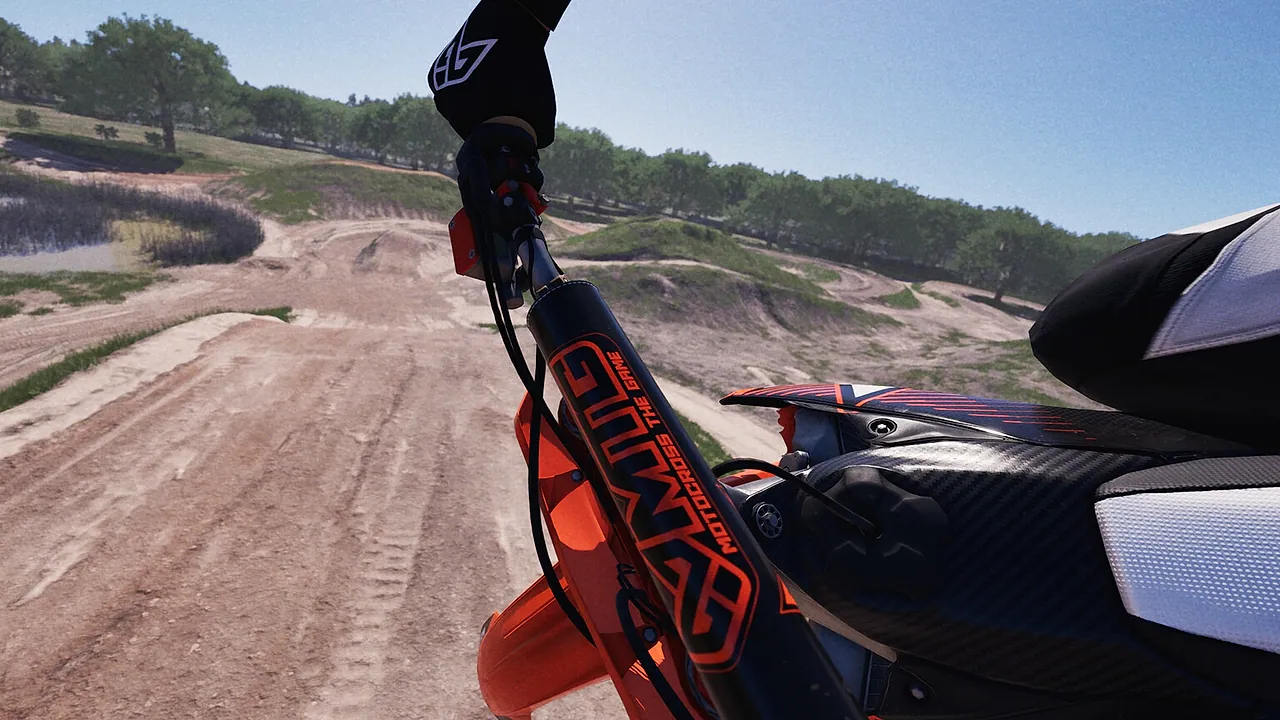
Can I jump in first person? You can, but it is harder to judge the bike's pitch. Learn in chase camera first.
Do whips make you faster? Not usually. A scrub can help you stay low and carry speed, but a whip is mostly style. Learn the fundamentals first.
Why does the bike rotate in the air? Throttle, body position and the shape of the lip all affect rotation. Small inputs are enough to correct it.
Sources
- Motocross The Game on Steam ↗
- Official Motocross The Game site ↗
- Official time attack leaderboards ↗
Official source: Steam store description and official about page, checked November 10, 2026. Jumping technique is based on motocross fundamentals and the game's two-body physics model.