
Green Peaks Track Guide: Reading Terrain and Finding Flow
A practical Green Peaks guide for Motocross The Game: scouting an unclassified layout, gearing for elevation, body position and a repeatable practice plan.
Green Peaks is one of the six Motocross The Game launch tracks, but its country and surface are not described in the official material. Treat it as a terrain-reading test: scout slowly, run a neutral setup, gear for the elevation you find and build flow before you chase lap time.
Green Peaks is the mystery layout. The name suggests hills and trees, but the official material does not confirm a country, a surface or a world record. That makes it a different kind of challenge from Rödeby CK or Pacific Crown.
Instead of giving you a setup to copy, this guide gives you a process for reading the terrain. That process works on any track, including the ones the developer adds after launch.
What we know
- Green Peaks is one of six launch tracks.
- It appears in the official track list.
- Its country and surface are not described.
Everything else is inference. The name suggests elevation, and the official screenshots include wooded, hilly terrain, but a name is not a specification. Ride the track before you tune for hills.
Why terrain reading matters
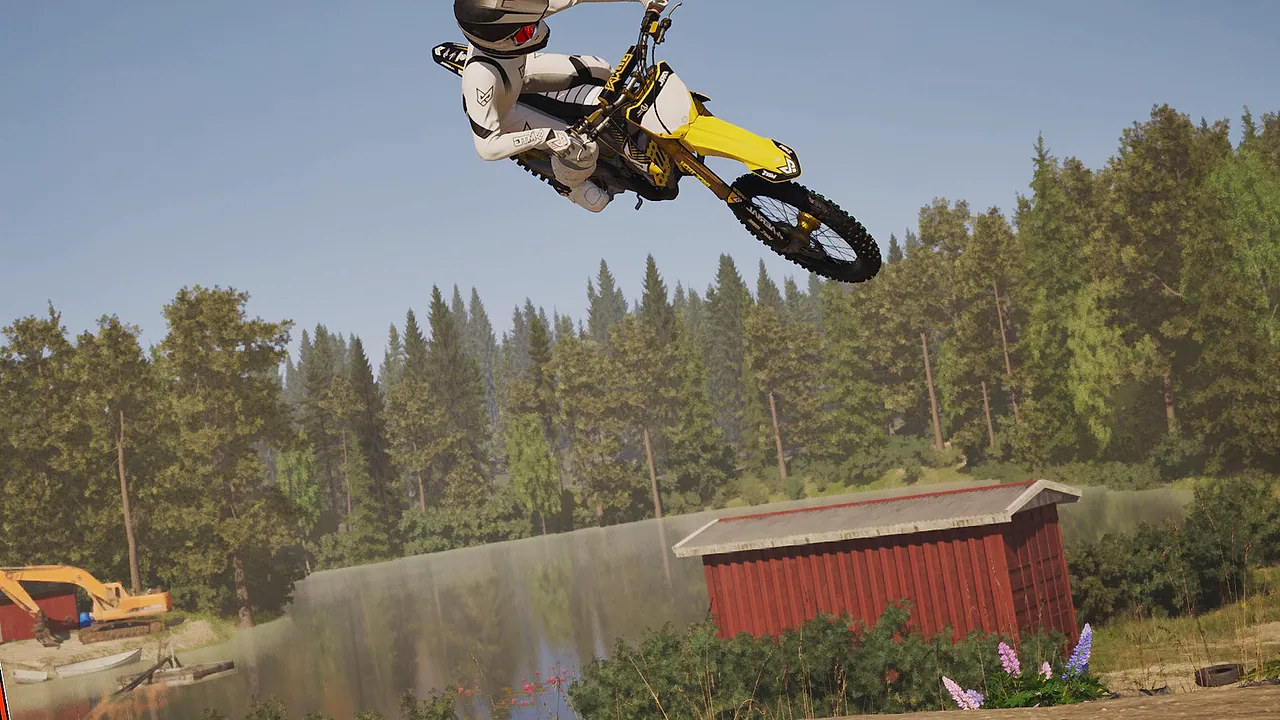
A motocross track is a series of problems: a corner that wants a certain entry, a jump that wants a certain speed, a hill that wants a certain gear. The rider who reads the problems fastest solves them first.
On a known track, you can memorize the solutions. On an unknown track, you need a method:
- Identify the terrain type.
- Identify the grip level.
- Identify the elevation changes.
- Identify the jumps and ruts.
- Build a setup and a line plan.
This is the same method a real rider uses on a practice day at a new track.
Scout the elevation
Ride five slow laps and note every uphill and downhill.
Uphills. The bike needs torque. If you are bogging, you are in too tall a gear or too low in the revs. If you are spinning, you are too aggressive.
Downhills. The bike needs stability. Keep your weight back, use the engine brake and avoid locking the front. A downhill corner is often faster than it looks.
Crests. A crest can launch the bike or unload the front. Stay neutral and be ready for a light front wheel.
Compressions. A dip can bottom the suspension. Stand up and let your legs absorb the load.
Write down the sequence. A track with three uphills and two downhills has a rhythm; find it.
Setup for elevation
Gearing. Start stock. If the bike bogs on the steepest uphill, go one tooth shorter on the rear. If it hits the limiter on the longest straight, go one tooth taller.
Suspension. Slightly stiffer than a flat track if there are big compressions. Slightly softer if the terrain is rough and rooty.
Tyre pressure. Middle of the range. Elevation does not change the surface, but it changes how much load the tyre carries. Test one or two psi.
Body position. Forward on uphills, back on downhills, neutral on crests. Move before the bike needs it, not after.
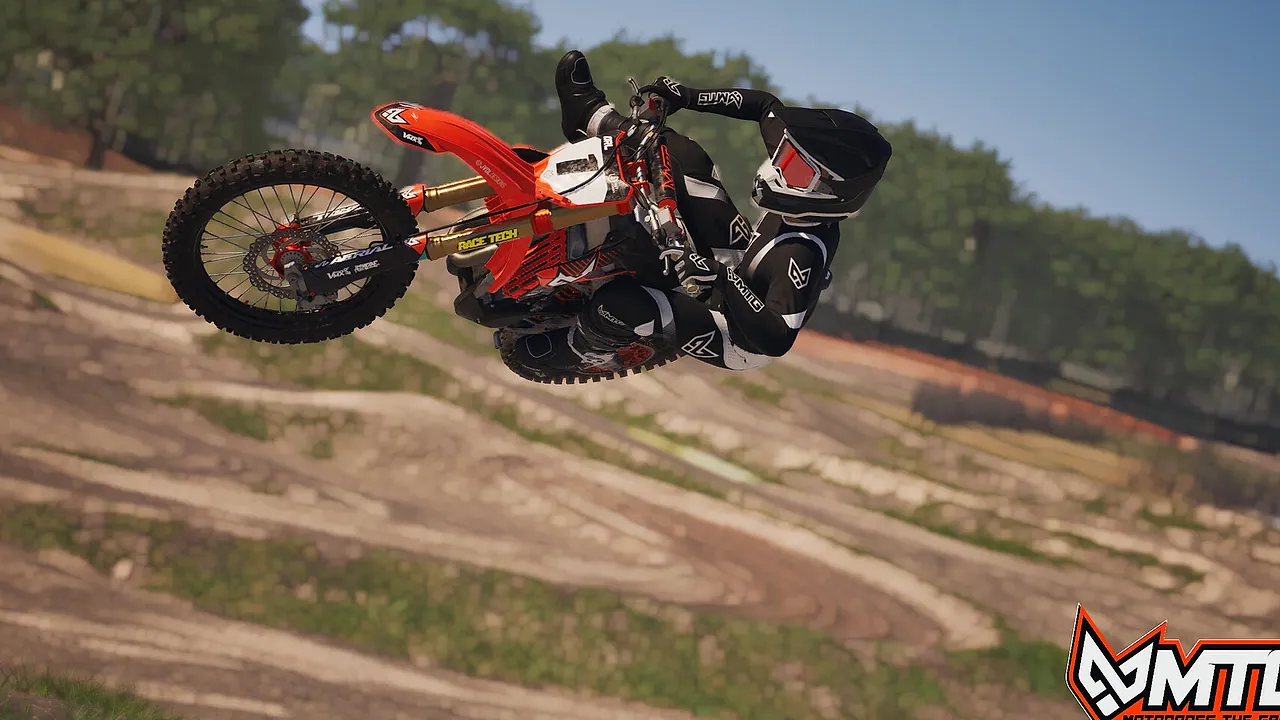
Finding flow
Flow is the feeling of linking corners without fighting the bike. It comes from three things:
Vision. Look two corners ahead. If you are staring at the front wheel, you will always be late.
Body position. Move your weight before the corner, not during it. A late weight shift unsettles the bike.
Throttle. Roll on, roll off. A choppy throttle breaks flow more than a slow entry.
On an unknown track, flow is more valuable than a perfect line. A rider in flow can adjust to a bad line; a rider fighting the bike cannot.
Jumps on unknown terrain
Roll every jump before you clear it. The face may be harder or softer than it looks. If the bike deflects on the face, soften the suspension or change your line.
On a wooded track, the landing may be shorter than you expect. Look at the landing zone, not the gap. If you cannot see the landing, roll the jump until you can.
Lines and braking
Pick a main line and a secondary line. The main line is your race line; the secondary line is your passing line.
Brake markers should be fixed. On a downhill, brake earlier and lighter. On an uphill, you can brake later because gravity helps you slow down.
If the track is wooded, the trees are your markers. Pick one tree per braking zone and use it every lap.
Before a session, close your eyes and ride the track in your mind. Name every corner and every jump. This is what real riders do on the drive to the track.
Racing Green Peaks
The first lap is a scout. The second lap is a line check. The third lap is the attack.
Do not fight for position in the first corner. On an unknown track, a clean line is worth more than a risky pass.
If you are tired, ride a smooth line and let the race come to you. A tired rider who tries a new line in every corner will crash.
Practice plan
Session 1: terrain. Five slow laps, note every hill and compression.
Session 2: baseline. Ten laps, best and average.
Session 3: gearing. Test one tooth shorter and one tooth taller.
Session 4: lines. Try three alternatives, keep the fastest.
Session 5: flow. Fifteen minutes at 90 percent, focus on vision and smooth inputs.
Common mistakes
Assuming the surface. Ride first.
Ignoring elevation. A flat-track setup can bog on a hill.
Braking late downhill. The front locks and the bike stands up.
Looking at the front wheel. You cannot plan a line.
Changing too many things. One change per session.
For the next step, the track overview→ covers the related inputs in more detail.
FAQ
What surface is Green Peaks? The official material does not state it. Ride a slow lap and inspect the dirt.
Where is Green Peaks? The official material does not state a country.
What gearing should I use? Start stock and adjust for the steepest uphill and the longest straight.
Is Green Peaks good for beginners? It is a good track for learning terrain reading, but the unknown surface makes it less predictable than Rödeby CK.
Sources
Official source: Official track list, checked November 10, 2026. Country and surface are not stated; all guidance is inference and must be verified in game.